
China's Defence Ministry says the militaries of China and India are making "great progress" in implementing the disengagement agreement to end over four-year-long standoff in eastern Ladakh. Spokesman Sr Col Wu Qian said Defence Minister Rajnath Singh and his Chinese counterpart Admiral Dong Jun had a positive meeting in Vientiane, Laos, last week, and the two sides are implementing the settlement reached between the two counties. The two ministers agreed to implement the important consensus reached between the top leaders and promote stable relations between the two countries, the spokesman said.
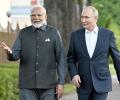
Russia has invited Prime Minister Narendra Modi to attend the May 9 celebrations marking the 80th anniversary of victory over Germany in World War II, Deputy Foreign Minister Andrey Rudenko has said.

Army Chief Gen Manoj Pande conducts a comprehensive review of the overall security situation in eastern Ladakh.

The Defence Ministry issued the order after the Cabinet Committee on Appointments cleared Singh's name for the top post, senior ministry sources said in New Delhi.
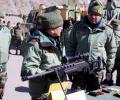
The Chinese aircraft have been regularly flying close to the LAC in the last three to four weeks which is seen as an attempt to probe the Indian defence mechanism in the area.

Amid tensions over build-up by the Chinese across the Line of Actual Control (LAC) in Eastern Ladakh and reluctance to resolve remaining issues between the two countries, Indian Air Force (IAF) chief Air Chief Marshal VR Chaudhari is visiting forward areas in Ladakh to review the operational preparedness of troops deployed there.

Before assuming charge of the CDS, Gen Chauhan paid tributes to India's fallen soldiers at the National War Memorial in the India Gate complex.

Newly-appointed Army Chief General Manoj Pande on Sunday said his 'utmost and foremost' priority would be to ensure very high standards of operational preparedness to face current, contemporary and future security challenges across the entire spectrum of conflict.

India's recent missile strikes on nine terrorist locations in Pakistan and Pakistan-occupied Kashmir (PoK), including Bahawalpur, mark a significant escalation in the long-standing military tensions between the two nations. This article provides a historical overview of the Indo-Pak military confrontations, tracing their roots back to the 1947 war following India's independence and the partition of the sub-continent, and highlighting key conflicts such as the 1965 war, the 1971 Bangladesh Liberation War, the 1999 Kargil War, the 2016 Uri attack, and the 2019 Pulwama attack.
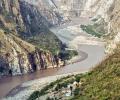
Pakistan may face a significant water shortage during the Kharif season due to reduced water supplies from India.
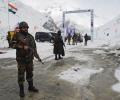
Indian and Chinese militaries on Monday moved back their frontline troops to the rear locations from the face-off site of Patrolling Point 15 in the Gogra-Hotsprings area in eastern Ladakh and dismantled temporary infrastructure there as part of a five-day disengagement process.
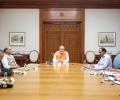
'The government has to explain (to the army, air force and navy chiefs) whether they want a punitive strike, a deep punitive strike, or whether they want limited war or an all-out war, will it be a circumscribed war or will it be a shallow attack along the border.'

It took India and the Indian Army to show to the world that enough is enough and to challenge the neighbourhood bully, he said.

He also said "Chinese belligerence is evident in its continuing propensity to project power outside its region", in turn presenting a "threat to the rules-based international order".

India and China recently held a fresh round of high-level military talks to resolve the border row that witnessed both sides agreeing to maintain "peace and tranquillity" on the ground but there was no indication of any breakthrough.

The sources have said that patrolling will begin at these points once the disengagement that began last week is completed and both sides will move their respective troops and dismantle temporary structures.

On Saturday, Ministry of External Affairs spokesperson Randhir Jaiswal told the media in New Delhi that the Indian Army has commenced verification patrolling at Depsang, the second friction point in eastern Ladakh.

India recently outflanked China by taking control of strategic height near Pangong lake's southern bank.

The two sides had started coordinated patrols in the first week of the month after completing disengagement in both Demchok and Depsang in the last week of October.

China on Tuesday confirmed that it has reached an agreement with India to end the standoff between the two armies in eastern Ladakh.

Gen Pande also said that Indian troops are adequately deployed along the Line of Actual Control to deal with any situation and that guidance has been given to them to "remain firm and resolute" in their tasks.

Syed Firdaus Ashraf marches through time to trace the bitter history between Russia and its West European neighbours.

The operations are being carried out in coordination with the railway authorities on the ground, he said.

Terrorism and insurgency in J&K had subsided when India demolished East Pakistan -- for the simple reason that Pakistan understands power. We need to follow Chanakya's dictum of Saam, Daam, Dand, Bhed for strategising against Pakistan, asserts Lieutenant General Prakash Katoch (Retd). The ground truth is that unless we are prepared to acknowledge our shortcomings, including massive intelligence failures, punish those responsible and take corrective actions, we will continue in the same vein, asserts Lieutenant General Prakash Katoch (Retd).
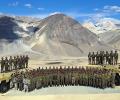
If China is accommodating regarding Depsang and Demchok, a resolution of the Sino-India territorial dispute in Eastern Ladakh could be possible.

Russian and Ukrainian negotiators convened in Istanbul on Friday for their first direct peace talks in over three years, amidst pressure from US President Donald Trump to resolve Europe's deadliest conflict since World War Two.
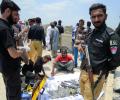
'This strike has certainly enhanced your image.' 'Otherwise, people would have called you a damp squib, capable of doing nothing except talking big.'
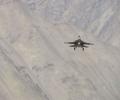
The frequency of day and night operations by frontline fighter jets is a signal that India will continue to put pressure on China until the status quo ante is restored in all the areas in eastern Ladakh including Pangong Tso, Gogra and Hot Springs, government sources said.

Under the direction of the ministry of external affairs, the Humanitarian Assistance and Disaster Relief (HADR) efforts are being progressed in conjunction with Headquarters Integrated Defence Staff, the Indian Army, the Indian Air Force and the National Disaster Response Force, the defence ministry stated.
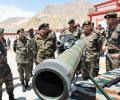
The Army has significantly bolstered its fire power along the frontier with China by deploying a range of rockets and artillery weapons and plans to procure an array of additional systems, including 100 K9 Vajra howitzers and UAVs, to augment combat prowess.

China has honored an army regiment commander who was injured in the Galwan Valley border clash with Indian soldiers in 2020 as an outstanding member of the national advisory body - Chinese People's Political Consultative Conference (CPPCC). Qi Fabao, who was made the torchbearer for the Winter Olympics in 2022, was among the 33 individuals honored with the 2024 Outstanding Performance Award for CPPCC Members. The incident, which resulted in the deaths of 20 Indian soldiers, led to a freeze in relations between the two countries for over four years. Ties were restored after a meeting between Prime Minister Narendra Modi and President Xi Jinping in October 2023.

Defence Minister Rajnath Singh on Tuesday handed over to the Army a raft of home-grown military hardware including unmanned aerial systems, quick reaction fighting vehicles, patrol boats and surveillance equipment for boosting its overall combat capability in eastern Ladakh.
General Officer Commanding-in Chief of the Eastern command, Lieutenant General R P Kalita, however, said the Indian side is also continuously upgrading its infrastructure and capabilities to deal with any situation which may arise along the border.

The Army said Gen Pande witnessed Parvat Prahar exercise besides interacting with officers and troops deployed in the region. The exercise featured a display of operational capabilities by artillery guns and other key weapon systems.

Defence Minister Rajnath Singh on Saturday said India has never attacked any country out of hatred or contempt but if its interests are threatened, 'we will not hesitate to take a big step'.

Defence Minister Rajnath Singh on Wednesday asked the Army to maintain strong vigil along the Line of Actual Control (LAC) with China as the situation in the northern sector remained "tense" in view of deployment of PLA troops.

'India is using Hasina to warn the Yunus government because there is a ground support for the Awami League in Bangladesh.'

The commanders present in Delhi gathered at the South Block in Raisina Hills area, while many others joined the deliberations virtually.

The India Army troops rose to the occasion to the challenges along the northern border as likely contingencies and possible options were war-gamed beforehand, Army Chief Gen M M Naravane said on Wednesday, referring to the eastern Ladakh standoff with China.

'If they aim to remain aligned with the public sentiment, as any democratic government should, then they must respond. Why else would the prime minister have cut short his visit to Saudi Arabia? And why would he have instructed the home minister himself to travel to Srinagar to assess the situation firsthand? This suggests that something is indeed being planned. I am quite certain of that, although the exact form it will take remains to be seen.'
